
Commercial & industrial epoxy floor coatings in San Francisco CA - a floor that holds up
Peeling or worn concrete in your shop, warehouse or kitchen? We prepare the slab and lay a coating picked for your traffic and reopening day.
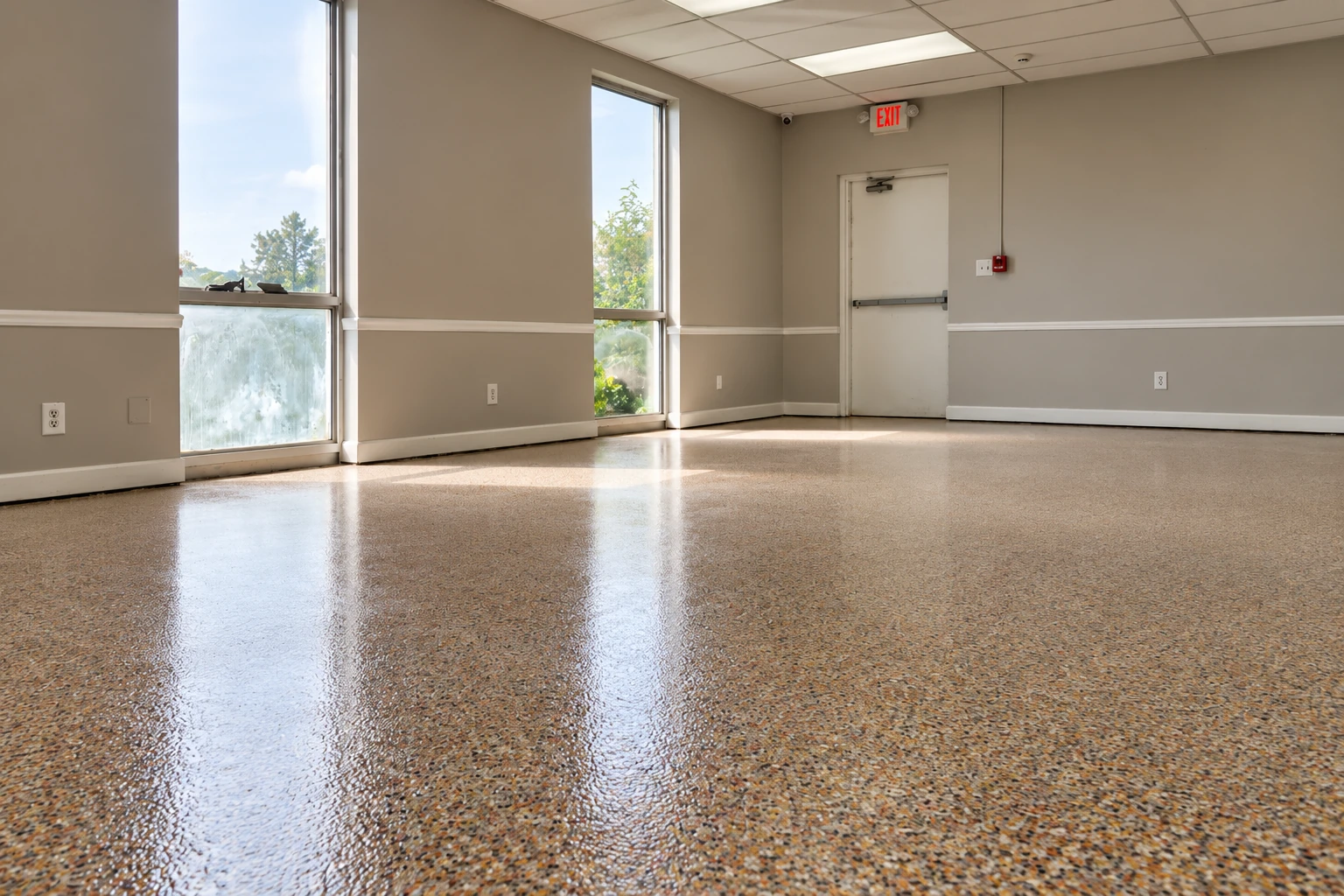
- Licensed and insured.
- Free estimates at your property.
- We reply within 1 business day.
What goes into a commercial epoxy floor, and how long will you be closed?
Commercial and industrial epoxy floor coating in San Francisco means grinding your concrete down to sound material and bonding a thick resin layer to it, so a shop, warehouse or kitchen floor holds up to carts, forklifts and daily cleaning. Most of the work is in the prep, and the topcoat we choose decides how soon you can open your doors again.
On a business floor, looks come second to the days you can afford to close. The price moves with the size of the floor, how much old coating or damage has to come off, whether the slab reads wet and which topcoat your traffic calls for. The schedule turns mostly on that topcoat and on how long your space can sit empty. When an old floor has to come up first, that's stripping and removal before anything new goes down. Honestly, a lot of it depends on your slab, so at the estimate I look at it and walk you through what each option means for your schedule.
How do you know your commercial floor needs a new coating?
Coating peeling in patches
Flakes lifting where carts turn or near the doors usually mean the old coating never bonded well, often because the slab wasn't ground or was holding moisture. Every week you wait, more of it lets go, and the loose edges become trip spots and more material to strip before we can recoat.
Bubbles and soft blisters
Small raised blisters that pop or feel soft underfoot usually point to moisture or contamination coming up through the slab. Coating over them only hides the problem for a while, so we find out what's pushing up before anything new goes on.
Dust and worn traffic lanes
Gray dust that's back the day after you sweep, or bare paths where forklifts run, means the concrete surface itself is breaking down. That dust gets into stock and equipment, and the longer it wears, the deeper the ruts we have to fill before coating.
How we install commercial and industrial epoxy floor coatings
The first thing I ask on a business floor is how long you can close, because that answer picks the topcoat more than anything else does. Then our crew grinds the concrete with machines to take off the weak top layer, old sealer, curing compound and grime, so the resin grabs sound concrete instead of whatever was sitting on it. We fill cracks and low spots, put down the epoxy base and finish with a topcoat chosen for your traffic, your cleaning routine and the day you need the space back.
If your space has to reopen fast, a polyaspartic floor coating is often the topcoat that makes the schedule work. And if you've got a shop or home garage that needs the same kind of tough floor, our garage floor coatings use the same careful prep on a smaller slab.
Epoxy base, epoxy finish
This suits indoor warehouses, stockrooms and back-of-house floors that stay out of the sun and get ordinary cleaning. Epoxy brings the strength, build and grip on the concrete those floors need most.
Epoxy with a polyaspartic topcoat
This suits retail floors and shops that can't stay closed long, because polyaspartic usually gets a space back into service faster. You still get the epoxy's bond underneath.
Epoxy with a urethane topcoat
This suits kitchens, labs and shops with chemical spills, harsh cleaners or sunlight on the floor, where epoxy usually isn't used as the final wear surface. Urethane holds up better to long wear and chemicals, though it needs more time before heavy loads go back on.
Get a coating plan built around your downtime
Send us your floor size, how the space is used and how long you can close, and we'll reply within one business day to set up a visit. I come out myself, check the slab and go over your options with you. The estimate is free, done at your property and comes with no pressure and no obligation.
(415) 918-5395San Francisco rules that shape commercial and industrial epoxy floor coatings
The city may need to approve installing or replacing a floor, and building permits come from the Department of Building Inspection at the Permit Center. Whether your job needs one isn't something I'd guess at from a phone call, so permit questions come up at the estimate, and when a job needs one we help you work through it with the city's building office and do the work to what the permit asks. If you run a restaurant, café or store that sells food, a remodel may need approval too, and the city's permit process for food facilities includes a review by the Department of Public Health, so it pays to start that early.
Coatings here also have to stay under the Bay Area Air Quality Management District's limits on the compounds that evaporate as a coating cures, and no one may apply a product that goes over them, so we only bring products that fit. On jobs in Oakland and South San Francisco we meet the same older warehouse and shop slabs we see in the city, often with layers of old sealer to grind off first.
What happens when you call about a commercial epoxy floor in San Francisco?
Call or send the form
Call (415) 918-5395 or use the form, and we'll get back to you to set up a visit. It helps to have your floor size in square feet, how the space is used, the slab's age and how long you can close.
I walk the floor with you
I check the slab for moisture and old coatings, then walk you through your options and what each one means for your schedule. You'll know which system you're paying for, so you can weigh the price against the days you're closed.
Our crew preps and coats
If you go ahead, our own crew prepares the concrete and puts down the system we agreed on, with a lead installer running the job day to day. We plan the work around the closing window we settled on at the estimate.
We hand the floor back
Before you reopen, we show you and your staff how to clean and care for the new floor. How it's cleaned has a lot to do with how long it lasts.
Frequently asked questions
How much does commercial epoxy flooring cost in San Francisco?
Epoxy floor coating in San Francisco usually costs about $4 to $15 per square foot, which is a fair planning number for the market, not a quote. Where your floor lands depends on how much prep the slab needs, whether it needs a moisture barrier and which build and topcoat you choose. Your own figure comes from the free estimate.
How long will my business be closed for an epoxy floor?
One commercial flooring cost guide puts a standard system on a 5,000 square foot floor at two to four days of work, plus cure time. After that, the topcoat sets your reopening, with the guide listing forklifts back on a polyaspartic topcoat in 24 to 48 hours and heavy loads on a standard urethane after 3 to 5 days. That's why I ask about your downtime before anything else.
How do I compare epoxy floor bids from different contractors?
Ask each bidder exactly which system the price covers, because a thin roll-on coat and a full epoxy system are very different floors. The same cost guide lists a thin roll coat at 2 to 4 years against 7 to 12 years for a standard 100% solids epoxy with a topcoat. It's also fair to ask how they prep, since acid etching leaves behind the surface layer and old sealer that grinding takes off.
Why does slab moisture matter for an epoxy floor coating?
Too much moisture in a concrete slab after the floor goes on can make the coating lose its bond and break down. That's why we test the slab first, and when it reads wet our crew puts down a moisture-barrier primer before the epoxy, which adds a step to the job.
How long does new concrete need to cure before an epoxy coating?
About 28 days is the generally accepted minimum before a finish goes on new concrete, though that doesn't fit every slab. On a new building or an addition, we go by what the slab tells us when we test it, not by the calendar alone.
Who is responsible for getting the concrete ready before an epoxy floor goes down?
Unless the contract says otherwise, one coating maker's guide puts a sound concrete base on the owner, the owner's representative or the concrete contractor. So it's worth asking that your contract name who handles the base. On our jobs our crew prepares the concrete, and we go over what that prep includes at the estimate.
San Francisco, CA
Plan your floor around your reopening
A food business remodel or a tight closing window goes a lot smoother when we've seen your slab before you set dates, so call (415) 918-5395 or send the form.