Epoxy floor coatings in San Francisco CA - a coating that stays bonded to your slab
Peeling paint, oil stains or dusty concrete on your floor? We test and prep the slab first, so the epoxy coating holds.
- Licensed and insured.
- Free estimates at your property.
- We reply within 1 business day.
What does an epoxy floor coating involve, and what sets the price?
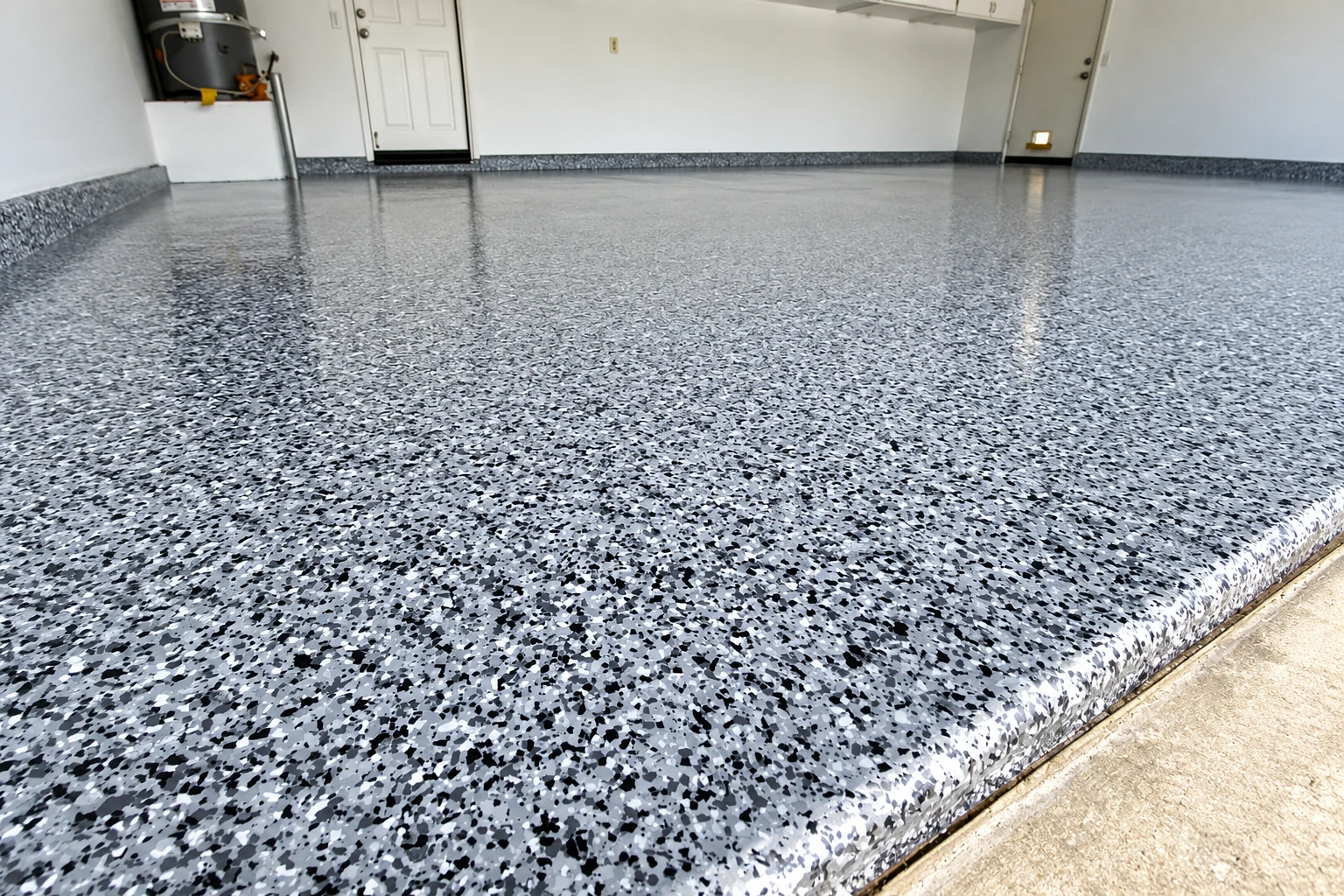
An epoxy floor coating in San Francisco is a tough resin layer bonded to your concrete, usually an epoxy primer and body coat under a protective topcoat, and it turns a dusty, stained slab into a floor that wipes clean.
Most people call me about a garage, a basement or a shop floor that's flaking, stained or shedding dust, and often there's an old coat of paint or sealer on it that has to come off first, which is where our concrete floor stripping and removal work starts. The price moves with the size of the floor, how much old coating, sealer and oil has to come off, what the moisture check shows and which topcoat you pick. The schedule turns mostly on that same prep, because a slab that needs more work before it's ready takes longer to get there. I can't tell you either one until I've seen your concrete, so the estimate is where you get your own figure and what each option means for your schedule.
How do you know your concrete floor needs a coating, or a redo?
Old coating peeling up
If paint or an old coating is flaking off in patches, especially where tires sit, it usually never bonded well to the concrete underneath. Waiting lets the peeling spread, and every loose patch is more to strip before a new coat can go down.
Bubbles in the finish
Raised bubbles or blisters in a coating usually point to something coming up from the slab, and moisture is the usual suspect even when the floor feels dry. Putting another coat over them only hides the trouble for a while, because the new layer tends to lift the same way.
Dust and dark oil spots
Bare concrete that sheds gray dust or holds dark oil spots is the floor most people want coated. The longer oil sits, the deeper it soaks in, and a badly soaked spot can mean cutting out concrete instead of just cleaning it.
How we put down an epoxy floor coating
We start under the floor, because epoxy holds only as well as the concrete it sits on. We check the slab for moisture you can't see, take off old sealers, paint and oil stains, and grind the surface so the primer has clean, open concrete to grip. Then our crew lays an epoxy primer and an epoxy body coat for thickness and strength, and finishes with a topcoat that takes the wear, and if the floor gets sun, we plan a topcoat that stands up to it from the start instead of finding out later.
Shops, warehouses and kitchens take a lot more traffic than a house, which is what our commercial and industrial epoxy floor coatings are built for. If the floor you're thinking about is in the garage, our garage floor coatings page covers what tires, drips and dropped tools ask of a coating.
Epoxy system for indoor floors
Suits basements, laundry rooms and storage floors that don't see much sun, because a standard topcoat over the epoxy gives them a sealed, easy-to-clean surface. It's the plain, sturdy choice when the room stays out of the light.
Epoxy with a sun-ready topcoat
Suits garages that sit with the door open and floors by big windows, because sunlight is hard on epoxy left on its own. We pick the topcoat for that sun at the estimate, so it's part of the plan from day one.
Your epoxy floor estimate, with the slab checked first
We reply within one business day to set up a visit, and I come out myself to look at the floor and check the concrete for moisture and old coatings. The estimate is free, it happens at your property and it comes with no obligation, so you can take it and think it over.
(415) 918-5395What changes an epoxy floor coating job in San Francisco
In California, local air districts set the limits on VOCs, the solvents that evaporate off coatings and cleaners, so the products we bring to your floor have to fit the local district's rules, and we choose them with that in mind. If you've got leftover household hazardous waste in the garage that you'd like gone before we start, the city's household hazardous waste program lets San Francisco residents request a free home pickup, find a drop-off spot nearby or take it to Recology's Household Hazardous Waste Facility.
A lot of garages here sit under the house on older slabs that have been painted or sealed more than once, so stripping usually takes up more of the job than people expect. We find the same layers on jobs in Daly City and Oakland, and we handle them the same way, by getting down to clean concrete before any primer goes on.
What happens after you call us about an epoxy floor?
Call or send the form
Call (415) 918-5395 or send the form, and we'll set up a time for me to come out. Tell us whether it's a garage, basement or shop floor so I know what to look for.
We check your slab on site
I look the floor over and check the concrete for moisture and old coatings before I suggest anything. Then I walk you through the options that fit your slab, what each one costs and what each means for your schedule.
Our crew preps and coats
Our crew prepares the concrete and puts down the system we agreed on, with a lead installer running the job day to day. When it's done, we show you how to care for the floor so it keeps looking the way it did on the last day.
Frequently asked questions
How much does an epoxy garage floor cost in San Francisco?
Installed epoxy garage floor coating usually costs about $3 to $12 per square foot across the US, and that's a national figure, not a San Francisco quote. Where your floor lands depends mostly on how much prep the slab needs and which topcoat you choose. The estimate gives you your own number.
Why does moisture matter if my concrete floor looks dry?
Coating makers point out that a slab can be bone dry to the touch and still carry enough moisture inside to lift a coating within months, and it shows up later as blisters or a coating that lets go. How much moisture is acceptable is set by the coating maker's technical data sheet or the project specification. You can ask us which one sets the limit for your floor.
Will an epoxy floor turn yellow over time?
It can, because epoxy can yellow under UV light, so a floor that gets sun may need a compatible UV-stable topcoat. That's easiest to plan before the work starts, which is why I ask about sun on the floor at the estimate.
Is acid etching enough prep for an epoxy floor?
Usually not, because the prevailing view among coating professionals is that acid etching isn't adequate preparation for resin flooring. Ask every installer you talk to how they'll prepare the concrete before any coating goes down, and I'll tell you exactly how we'd prepare yours.
How do I deal with oil stains on concrete before an epoxy coating?
Soaked-in oil and grease have to come off before the concrete is roughened, along with curing compounds, old sealers and silicone, because all of them keep a coating from bonding. Heavily oil-soaked concrete sometimes has to be cut out entirely, and I'll tell you at the visit if any of yours has gone that far.
What is the best way to choose a topcoat for an epoxy floor?
Start by asking which topcoat goes over the epoxy, because that top layer is what protects the floor from wear. A common system puts a polyaspartic or urethane topcoat over the epoxy primer and body coat, and since polyaspartic is usually thinner than an epoxy body coat, it works as the top layer rather than the main one.
San Francisco, CA
Get your concrete checked before epoxy goes down
Have your floor size handy and note any oil stains, old sealer or afternoon sun, so the first call goes quicker and the visit covers what your floor needs.