
Self-Leveling Concrete & Overlays in San Francisco CA - a flat base for new flooring
Dips, ridges or old patches that would show through your new floor? We check the base first, then pour a flat layer for the finish.
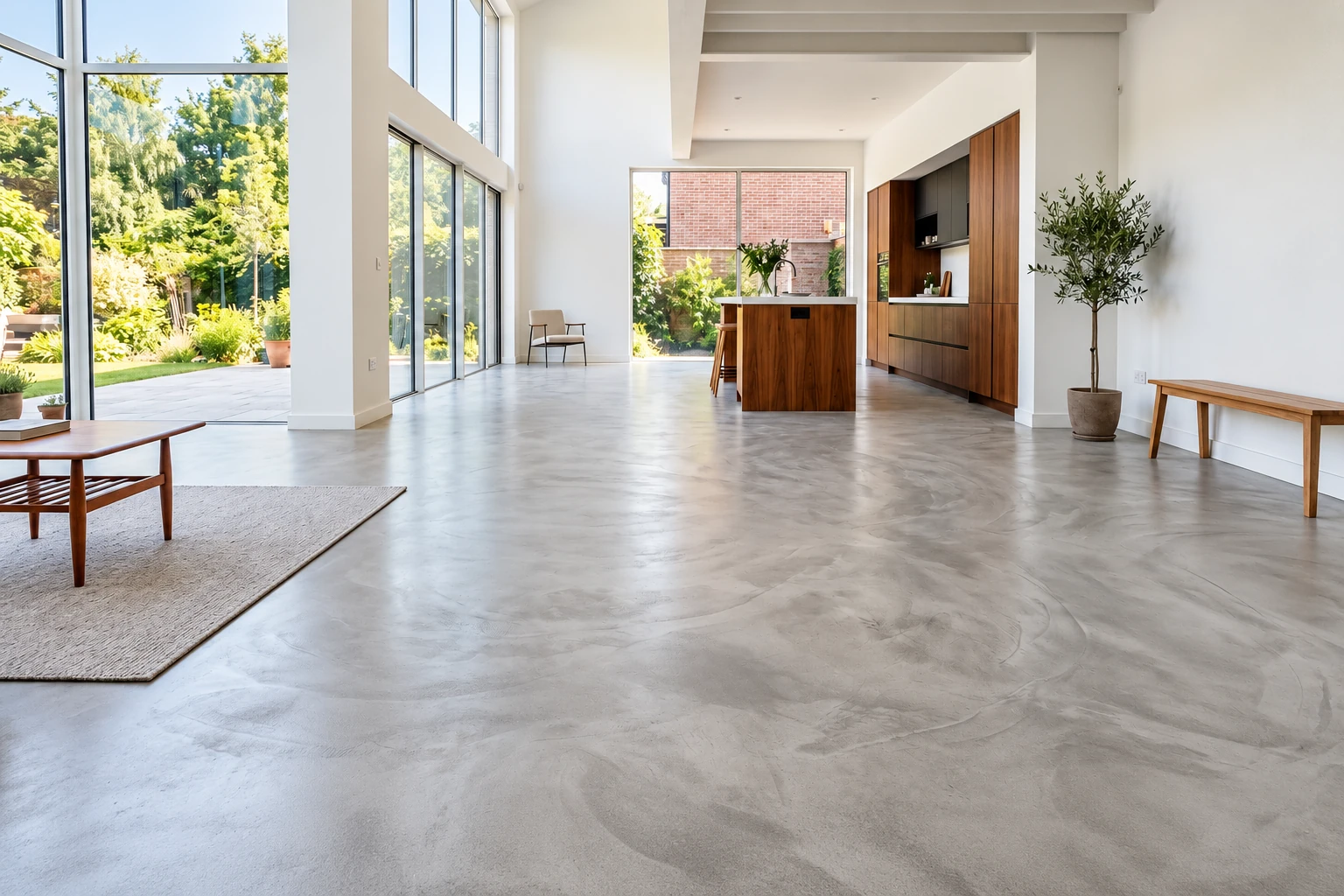
- Licensed and insured.
- Free estimates at your property.
- We reply within 1 business day.
Does your floor need leveling before the new one goes in?
Self-leveling concrete and overlays put a thin, flat layer over your existing floor in San Francisco, so the new tile, plank or coating you've picked goes down smooth instead of following every dip and ridge in the old one.
Most calls start with new flooring already picked out and a floor underneath that rolls, dips or carries old patches, and the real question is whether it's ready. The price turns mostly on room size and how much the base needs before we pour, and some slabs need grinding and surface preparation first. The schedule turns on those same repairs and on keeping the room steady before and after the pour, and the estimate is where you see what each option means for your timing.
How do you know your floor needs leveling first?
Dips you can feel walking
You notice low spots underfoot, or a straightedge rocks and shows daylight across the room. That usually means the slab settled or was never poured flat, and if new tile goes straight over it the tile can crack, while plank can flex and open at the seams.
Ridges from old repairs
Old patches, leftover glue lines or the outline of a wall that used to stand there leave humps you can see when light hits the floor low. Thin finishes like vinyl show every one of them, so waiting until the new floor is down means living with the bumps or pulling it back up.
Soft or stained spots
On a wood subfloor, a dark stain or a spot that gives when you step on it usually points to an old leak. Leveler won't fix wood that's gone soft, and covering it just hides a problem that tends to show up again in the new floor.
How we handle self-leveling concrete and overlays
Leveler goes under your new floor, so before anything else we check the base for active cracks, moisture or wood subfloor that's taken on water, because any of those carries up into the finish no matter how good the pour looks. Once those are dealt with, our crew cleans and prepares the surface, primes it the way the leveler maker calls for, then mixes and pours the leveler and spreads it so it settles out flat. We keep the room closed while it cures, and then it's ready for the flooring you picked.
Some floors need clearing before they can be leveled, and that's our concrete floor stripping and removal work, taking up old coatings, tile or glue so the leveler bonds to sound concrete. If the concrete you're worried about is outside around a pool, that's a different job, and our pool deck coatings and resurfacing work covers it.
Leveling over a concrete slab
This suits ground floors, basements and garages turned into living space where the slab is sound but uneven. A dry slab with no moving cracks is the simplest base we level, so the moisture check decides how straightforward your job is.
Leveling over a wood subfloor
This suits upper floors and older houses where the boards have dipped or the old underlayment is uneven. The wood has to be solid and dry first, so it works best in rooms with no history of leaks underneath.
Get your floor checked before you order flooring
Send the form and we'll reply within one business day to set up a time at your property. The estimate is free, on site and comes with no obligation, and you'll come away knowing what your base needs before you buy a thing.
(415) 918-5395What affects self-leveling concrete jobs in San Francisco
Most leveling jobs here start with old flooring coming up, and that's where the Bay Area Air District comes in. Its notification rule applies to contractors and homeowners renovating a structure where more than 100 square feet of friable, regulated asbestos-containing material will be disturbed, and it lists vinyl floor tiles and mastics, the glue under them, among materials that might contain asbestos. It also says a newer building can contain asbestos, so the age of your house doesn't settle it, and we get that question answered before removal starts, not halfway through. Permit questions come up at the estimate too, and when a job needs one, we help you work through it with the city's building office and do the work to what the permit asks.
We're based in San Francisco and work down the Peninsula and across the Bay, where we find older houses with patched slabs, rooms added on over the years and wood floors with a leak or two in their past. We see the same mix on jobs in Daly City and Oakland, so the checks come first wherever the house is.
What happens when you call about a self-leveling floor in San Francisco?
Call or send the form
Call (415) 918-5395 or use the form, and we'll set up a visit at your property. If you've already picked your new flooring, have the product name handy.
Look at the base together
I come out, check the slab for moisture and old coatings, look for cracks or soft subfloor and walk you through your options. You'll know what the base needs and what each option means for your price and schedule before you commit to anything.
Prep the base and pour
Our crew makes the repairs we agreed on, prepares the concrete and puts down the leveler. One leveler maker wants the slab and room air within its set temperature range before the pour and for at least 72 hours after, and its guide says to keep doors and windows closed, heat and air conditioning off and direct sun off the floor until the layer cures.
Walk the finished floor
Once it's cured, we walk the floor with you so you can see it's flat and ready for the finish. We also show you how to care for it until your new flooring goes down.
Frequently asked questions
Can you pour self-leveling concrete over a cracked floor?
Not over cracks that are still moving. One leveler maker advises against using self-leveling underlayment over active cracks, because moving joints or cracks in the base can carry up through the layer and crack your finished flooring. Those cracks get repaired first, which adds to the job, so I look for them at the estimate.
How do I know if my concrete floor needs a moisture test before leveling?
Plan on one, because one leveler maker advises moisture-testing concrete floors to pick the right self-leveling underlayment, and the result decides which product goes down. I check the slab for moisture when I come out, so you have the answer before any work is scheduled.
What does self-leveling concrete cost in San Francisco?
There's no fair number until I've seen the floor, because the cost turns on the room size and how much the base needs before the pour. Repairing active cracks, replacing water-damaged subfloor and taking up old flooring each add to the job, while a dry, sound slab with nothing to remove keeps it simpler. You get your own price at the estimate.
What is the best way to level a wood subfloor with water damage?
Replace the damaged wood before any leveler goes on it. One leveler maker's guide says to always replace wood subfloors or underlayments that have had water damage, so a room with past leaks may need new subfloor first, and that belongs in your budget from the start.
Can self-leveling concrete be used outside in San Francisco?
Not the products this page is about, because one maker says its self-leveling underlayments are for interior floors only, so where the floor is decides what can go on it. If the concrete is a sidewalk, San Francisco requires a Sidewalk Repair Permit for any sidewalk repair work, which is a separate job from leveling a room.
Which California license classes cover concrete and flooring work?
Two state license classes cover this kind of work. The concrete contractor class covers forming, pouring, placing and finishing flat concrete work, and the flooring contractor class covers preparing any surface for flooring, which is the part of the job a self-leveler does.
San Francisco, CA
Find out what your floor needs first
Call (415) 918-5395 or request a quote before your new flooring arrives, so any crack repair or subfloor work fits in ahead of the install.