Metallic Epoxy Flooring in San Francisco CA - a one-of-a-kind floor on sound concrete
Tired of a stained, dull slab? We grind it smooth, check it for moisture and lay a metallic finish you've approved from a sample.
- Licensed and insured.
- Free estimates at your property.
- We reply within 1 business day.
Is metallic epoxy right for your concrete floor?
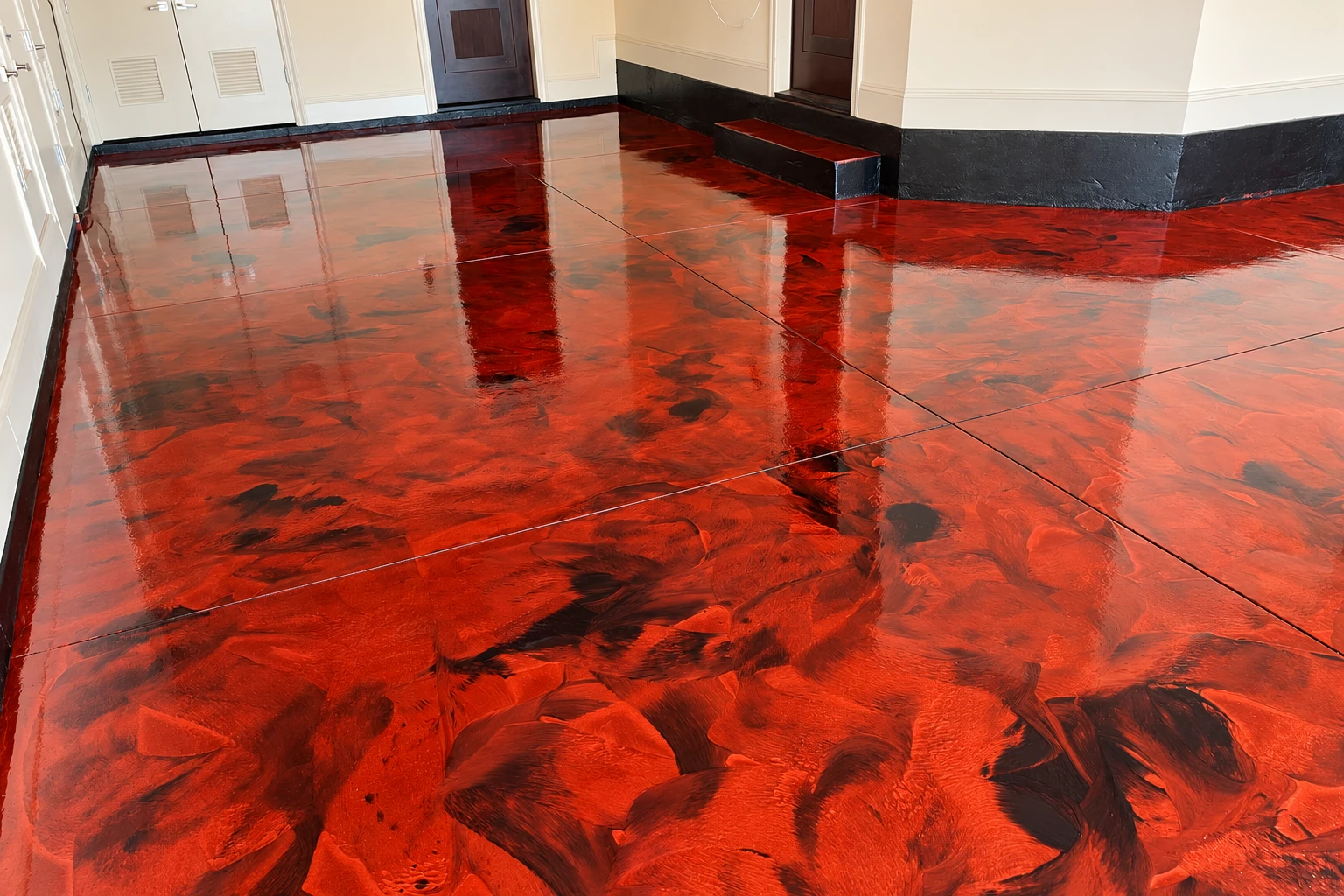
Metallic epoxy flooring is a resin coating with metallic pigment that flows into swirls and depth, and in San Francisco we put it down in garages, homes and shops where you want a floor that looks like no one else's. It takes more than a day, because each coat has to set before the next goes on, and the concrete has to be ground clean and smooth before any of it.
Most people who call me have a plain gray slab, an old painted floor that's flaking, or a garage they'd like to use as more than a garage. The price turns mostly on the size of the floor, how much grinding it needs, whether old paint or sealer has to come off first, which is floor stripping work of its own, and which clear topcoat you pick. The schedule turns on that same prep, plus how long your topcoat needs before you can walk or drive on it, so at the estimate I look at your slab and tell you which options fit and what each one means for your schedule.
How do you know your floor needs work before it gets a metallic coat?
Paint or sealer peeling up
If an old coating is flaking at the edges or where tires turn, it has already let go of the concrete, and anything laid on top of it would go with it. The longer it sits, the more of it lifts and the more there is to grind off later.
Dark, damp-looking patches
Spots that look wet or leave a white powder usually mean moisture is coming up through the slab. Coat over that without checking and the floor can bubble or peel, which is the most expensive way to find out.
Cracks, pits and old patches
A metallic floor has no chips to break up the surface, so every crack and rough patch shows through the finish. Small damage is easy to grind and fill now, and it usually gets bigger the longer it's left.
How we install metallic epoxy flooring
We start by checking the slab for moisture, because a coating can't hold if vapor is pushing up under it. Then we diamond grind the concrete down to a clean, open surface and take any old paint or sealer off completely, since there are no chips on a metallic floor to hide a rough spot, and we fill cracks and grind them flush. No two metallic floors come out alike, so we lay a small sample first and you see the color and movement before the whole floor goes down. Once you've signed off, our crew puts down the layers, usually a primer that soaks into the concrete, a colored base coat, the metallic coat and a clear topcoat, letting each one set before the next.
Metallic isn't the right answer for every floor. In a commercial kitchen or anywhere with hot water and harsh cleaners, urethane cement flooring usually holds up better, and if you like the concrete itself and don't want a coating at all, polished concrete flooring grinds and hones the slab to a shine instead.
Polyaspartic clear topcoat
This is the one I'd pick for garages and sunny rooms, because sun yellows an epoxy clear coat and one flooring guide recommends polyaspartic anywhere with sun, which takes in every garage. It also cures faster than polyurethane, which matters when the garage is where the car lives.
Polyurethane clear topcoat
It costs less than polyaspartic, so it suits a tighter budget. The trade-off is a slower cure and slightly less wear resistance, so I'd keep it to rooms with lighter traffic and no rush to get back on the floor.
Subtle or bold metallic look
The look runs from soft, gradual color shifts to strong swirls and veining, and every floor turns out a little different. Quieter blends suit living spaces, and bolder effects suit a showroom or a garage you want people to notice.
Find out if your slab is ready for metallic epoxy
Send the form and we reply within one business day to set up a time for me to come out. The estimate is free and on site, and there's no pressure and no obligation. I'll check your slab for moisture and old coatings and walk you through which options fit.
(415) 918-5395Metallic epoxy flooring and permits in San Francisco
I don't guess on permits. Whether a job needs one is up to the city's Department of Building Inspection, and any filing there has to meet the current California codes plus San Francisco's own amendments. We bring it up at the estimate, and when a job needs a permit, we help you work through it with the building office and do the work to what the permit asks.
Most metallic floors we do here are garages under the house, ground-floor rooms that used to be storage, and small shops that want a floor customers remember. We see the same mix of garages and storefronts on jobs in Daly City and across the Bay in Oakland, and the prep is just as careful wherever the slab is.
What happens after you call about a metallic floor in San Francisco?
Call or send the form
Call (415) 918-5395 or write to us, and we set up a time for me to see the floor. Tell us roughly how big the space is so we know what we're walking into.
I check the slab myself
I come out, look the floor over, check the slab for moisture and old coatings and walk you through your options. You'll know what each choice means for your schedule, and nothing starts until you've said yes.
Our crew preps and coats
If you go ahead, our crew prepares the concrete, lays your sample for sign-off and puts down the system we agreed on. A lead installer runs the job day to day, so you always have one person to ask.
Learn how to care for it
When the topcoat is down, we show you how to care for the floor and when it's ready for feet and for a car. Those times depend on the topcoat you chose.
Frequently asked questions
How much does metallic epoxy flooring cost in San Francisco?
A professional metallic epoxy floor usually costs about $8 to $15 per square foot across the US, and that covers grinding, moisture testing and all the coats. One pricing guide puts the West Coast in the upper part of that range, so San Francisco quotes often land there. Your own number depends on the floor's size, its condition and the topcoat, and that's what the visit sorts out.
How long does a metallic epoxy garage floor take before I can drive on it?
With a polyaspartic topcoat, you can usually walk on the floor 4 to 6 hours after it goes on and drive on it after 24 to 48 hours. One flooring guide puts the work on a standard garage at 2 to 3 days before that, so plan on parking somewhere else for a stretch.
How do I know if my concrete slab needs a moisture test before epoxy?
If it's getting a metallic coating, it should be tested, because one coating maker advises checking a slab for moisture vapor before any coating goes down. Another maker requires a moisture barrier under slabs poured on the ground, since seasonal ground moisture can push vapor up even after a test looked fine. I check for moisture at the estimate, and it's worth asking whoever built or owns the place whether a barrier went in.
What causes epoxy to crack at the joints in a concrete floor?
It's usually the slab moving at its sawcut joints, the straight cuts made so concrete can shrink without cracking somewhere random. Those joints can be filled and coated over, but if the slab shrinks or moves a lot, the coating may crack along them over time. I'd rather tell you that up front than have it surprise you.
How long does new concrete need to cure before metallic epoxy?
At least 28 days under one coating maker's guide, and the slab should also meet that maker's moisture limits before anything goes on. New concrete keeps giving off water as it cures, so we test it instead of going by the calendar alone.
Is metallic epoxy slippery when it's wet?
It can be, which is why one coating maker recommends a slip-resistant additive in coatings that get heavy foot traffic, especially in wet or oily spots. If your floor sees water, oil or a lot of feet, we talk through adding one at the estimate.
San Francisco, CA
Get your slab checked for metallic epoxy
Call (415) 918-5395 or use the form, and send the floor size, the slab's age and any old paint or sealer, so I know what to look for when I come out.