Polyaspartic floor coatings in San Francisco CA - a coating that grips the slab
Peeling paint, stained concrete or epoxy that's yellowing by the door? We grind, test and coat your slab so the new floor bonds and holds.
- Licensed and insured.
- Free estimates at your property.
- We reply within 1 business day.
Is a polyaspartic floor worth paying more for than epoxy?
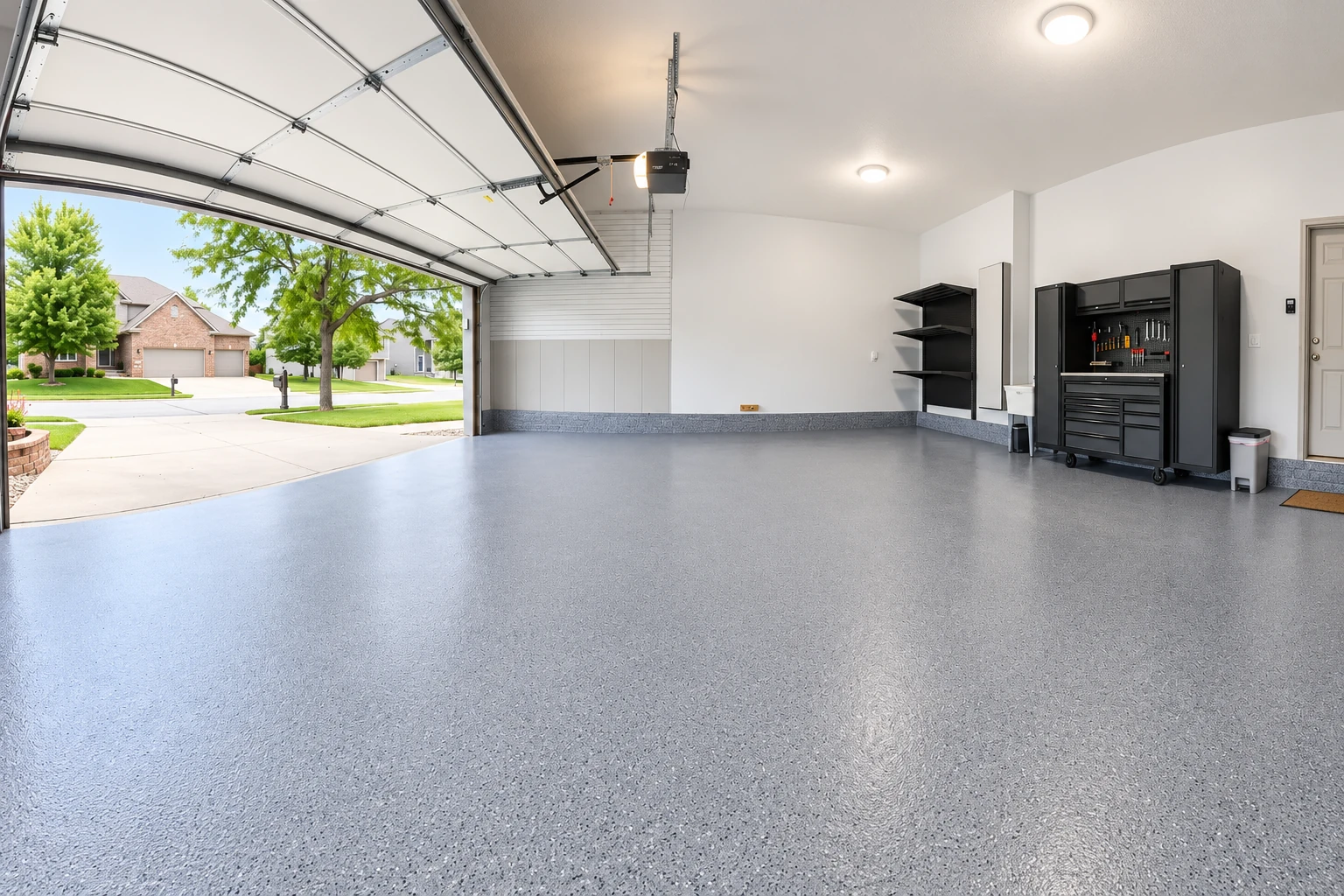
A polyaspartic floor coating is a type of polyurea that cures fast and stands up to sunlight, chemicals and scuffing, and in San Francisco we put it down on garage, basement and shop floors that need a tough finish without a long wait to use them again.
Most people who ask me about it have an old coating that's letting go or bare concrete they're tired of, and they're weighing it against a cheaper epoxy floor. What you'll pay turns on the floor's size, the shape the slab is in, which product goes down and any custom touches like color. The schedule turns mostly on the slab, because moisture, fresh concrete or an old sealer has to be dealt with before anything goes on. It depends on your slab, so your own number comes from the estimate, after I've seen it.
How can you tell your floor is ready for a new coating?
Old coating peeling or bubbling
When paint or epoxy lifts in patches or blisters up, the problem was usually in the slab before anyone opened a can, often moisture or poor prep. The longer it goes, the more loose coating there is to grind off before we can start over.
Yellowing near the garage door
Epoxy that has turned amber where the sun hits it is breaking down in the light, and it usually shows unevenly across the floor. A polyaspartic topcoat holds up to UV much better, so it's worth a look before the old floor starts chalking and wearing through.
Bare concrete that dusts and stains
Unsealed concrete sheds a fine dust and soaks up oil, salt and spills like a sponge. Every stain that sets in deeper takes more grinding to clean out, which adds time to the prep.
What our polyaspartic floor coating work includes
Before anything gets quoted, I lay out the difference between a full polyaspartic system and a blend with epoxy layers, so you can weigh what's worth it for your floor. Clearing the space ahead of time helps us get straight to the concrete, and it saves you paying a crew to move boxes. Then we grind the slab with diamond tools to open up its pores, repair cracks and fill chipped spots, because a coating only holds as well as the surface it's gripping. DIY kits use acid etching instead, which gives a weaker bond, so whoever quotes your floor, ask how they'll prep it. Once the slab is sound and checked, we put down the system you chose.
Polyaspartic isn't the answer for every room. If the floor is more about looks than hard use, metallic epoxy flooring gives a glossy, swirled finish a polyaspartic coat won't. For a commercial kitchen or a room that gets hot washdowns, urethane cement flooring is the tougher choice, and I'll tell you at the estimate if your space is better suited to it.
Full polyaspartic system
This suits a garage or shop that sees sun through an open door, car tires and spills, because every layer is the fast-curing, UV-resistant material. It costs more up front, and you get the system that performs best.
Epoxy and polyaspartic blend
This suits a tighter budget, since epoxy layers lower the cost. It may not perform as well as an all-polyaspartic floor, and I'll tell you plainly where that difference matters on yours.
Get your polyaspartic floor estimate, free and on site
We reply within one business day to set up a visit, and I come out myself to look at your floor and check the slab. The estimate is free, with no pressure and no obligation.
(415) 918-5395Polyaspartic floor coatings in San Francisco and around the Bay
In California, local air districts set and enforce the rules for coatings like this one. Here that's the Bay Area Air Quality Management District, and its rule doesn't allow a coating to go down above its limits on VOCs, the volatile organic compounds that come off a coating as it cures, outside the exceptions the rule lists. That means the product an installer brings matters as much as the hands putting it down, so we choose ours to fit the district's limits.
A lot of what we see in San Francisco is garages under the house and older slabs carrying layers of paint or sealer from years back, and all of that comes off before a new coating goes on. We're based in San Francisco and work in the cities around it, so we run into the same floors on jobs in Daly City, down the Peninsula and across the Bay in Oakland.
What happens when you call about a polyaspartic floor?
Call or send the form
Call (415) 918-5395 or fill out the form, and we'll get back to you to set up a visit. A line about the floor helps me know what I'm walking into.
I check the slab in person
I look at the floor, check the concrete for moisture and old coatings, and walk you through the full system and the blend. You leave with your price and what each option means for your schedule before you decide anything.
Our crew preps and coats
Our own crew does the work, with a lead installer running the job day to day. You have one person on site to ask if something comes up.
We walk the finished floor
When the coating is down, we show you how to care for it. You'll know when it can take water and cleaning, based on the product on your floor.
Frequently asked questions
How much do polyaspartic floor coatings cost in San Francisco?
Across the US, professionally installed polyaspartic floor coating usually costs about $5 to $12 per square foot. That's a national figure, not a San Francisco price or ours. Your own floor's number comes from the estimate, once I've seen the slab.
How long does a polyaspartic floor last compared to epoxy?
A professionally installed polyaspartic or polyurea system lasts about 10 to 20 or more years with little upkeep, while epoxy typically lasts 5 to 10. That longer life is what you weigh against the lower price of a solid color epoxy floor, and it's the main question I help people sort out.
Why does my concrete need a moisture test before a polyaspartic coating?
A moisture test shows whether the slab is ready to coat or needs a moisture-tolerant primer or a vapor mitigation system, a layer that holds back moisture from below, first. Moisture coming up through the concrete is one of the usual reasons a coating bubbles or lets go, so I'd rather find it at the estimate than after the floor is down.
How soon can I wash a new polyaspartic floor?
One maker's instructions call for at least 24 hours before water or a neutral cleaner touches the floor, and a full week before a cleaning machine runs on it. Other products set their own times, so go by the instructions for the product on your floor.
How long does new concrete need to cure before it can be coated?
One maker's instructions say to let new concrete cure for at least 28 days. A slab that's still damp or not fully cured can leave the coating hazy or let it lose its grip, so if your concrete is new, we plan the job around the product's own cure time.
Do polyaspartic floor coatings give off fumes?
Most polyaspartic coatings are very low in VOCs, but they can still give off fumes while they're going on. Good airflow and protective gear are a must during application, so plan on keeping people and pets out of the space while the crew works.
San Francisco, CA
Find out if polyaspartic suits your floor
Have the floor's rough square footage, its condition and any old sealer or coating in mind when you call, so our first conversation gets further.